Small observatory controled remotely

"Many years passed and work and life took me far from home, having me relocating in Asia (Shanghai) several years ago, where I currently live with my family. The incredible light pollution of this city and consequent impossibility to take astronomical photography, forced me to relocate all my equipment under the dark skies of the Australian outback, where I built a small observatory I control remotely through the Internet from everywhere I am."

Wow! Parlez moi de quelqu’un qui s’organise pour faire ce qu’il aime….. un italien qui a un observatoire en Australie et qui le controle a partir de Shanghai!!!! Et regardez les resultats dans ses galleries sur son site. Fantastique!

About Me

Importé de Google+

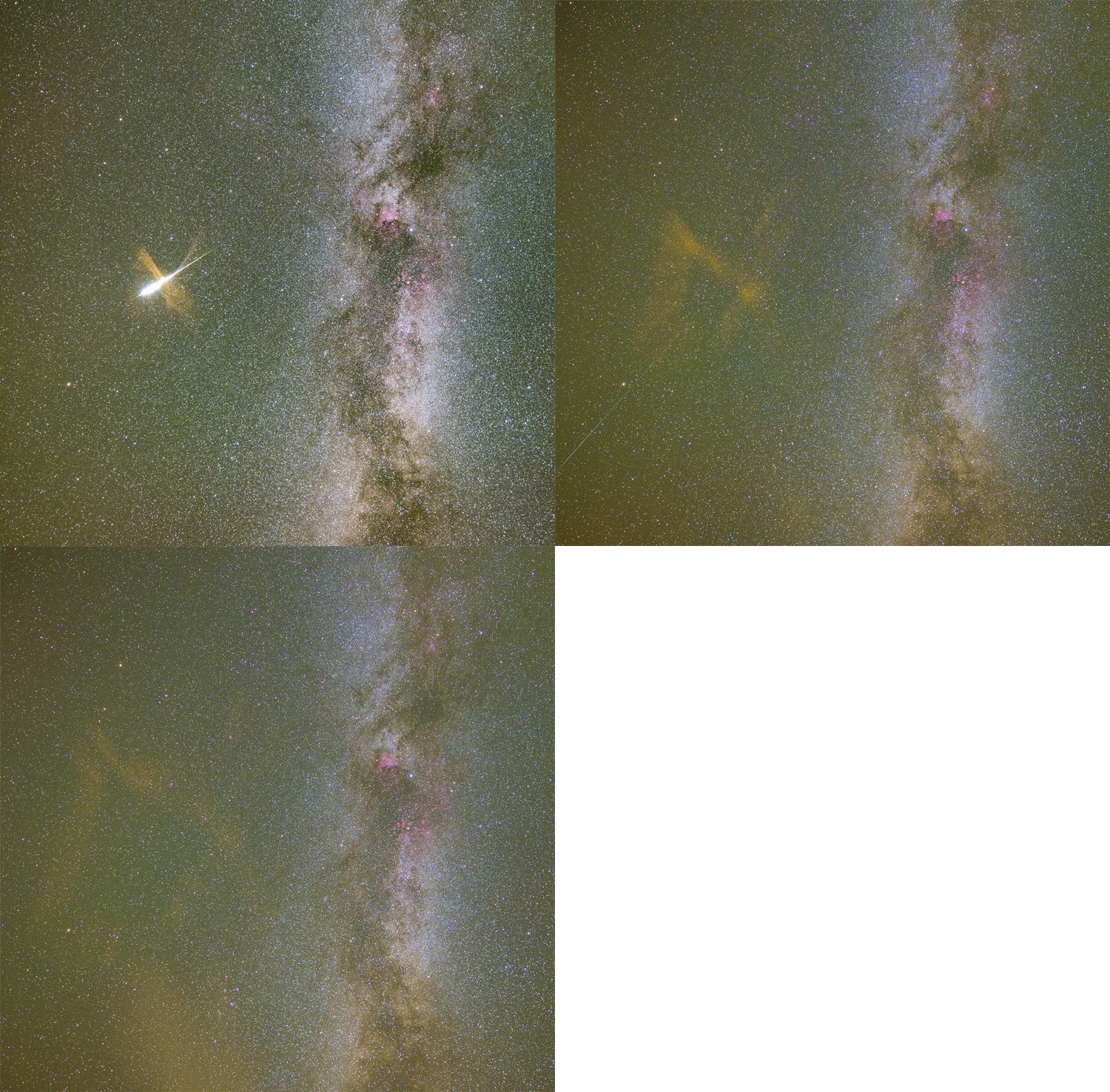
Milky Way and Exploding Meteor

Google+ reshared post

Milky Way and Exploding Meteor
Image Credit & Copyright: André van der Hoeven
http://apod.nasa.gov/apod/ap150812.html

Tonight the Perseid Meteor Shower reaches its maximum. Grains of icy rock will streak across the sky as they evaporate during entry into Earth’s atmosphere. These grains were shed from Comet Swift-Tuttle. The Perseids result from the annual crossing of the Earth through Comet Swift-Tuttle’s orbit, and are typically the most active meteor shower of the year. Although it is hard to predict the level of activity in any meteor shower, in a clear dark sky an observer might see a meteor a minute. This year’s Perseids occur just before a new Moon and so the relatively dark sky should make even faint meteors visible. Meteor showers in general are best be seen from a relaxing position, away from lights. Featured here is a meteor caught exploding two weeks ago above Austria next to the central band of our Milky Way Galaxy.

Importé de Google+