Importé de Google+
The Brown Dwarf Debate
Reply
Importé de Google+
Importé de Google+
Importé de Google+
Écouter le vidéo au complet est facultatif 😉
Importé de Google+
Importé de Google+
Importé de Google+
Google+ reshared post
Scientists have noticed that Jupiter’s Great Red Spot has been getting smaller over time. New evidence says the storm is getting taller – and more orange – as it shrinks. http://bit.ly/2GMIDxL
Importé de Google+
Google+ reshared post
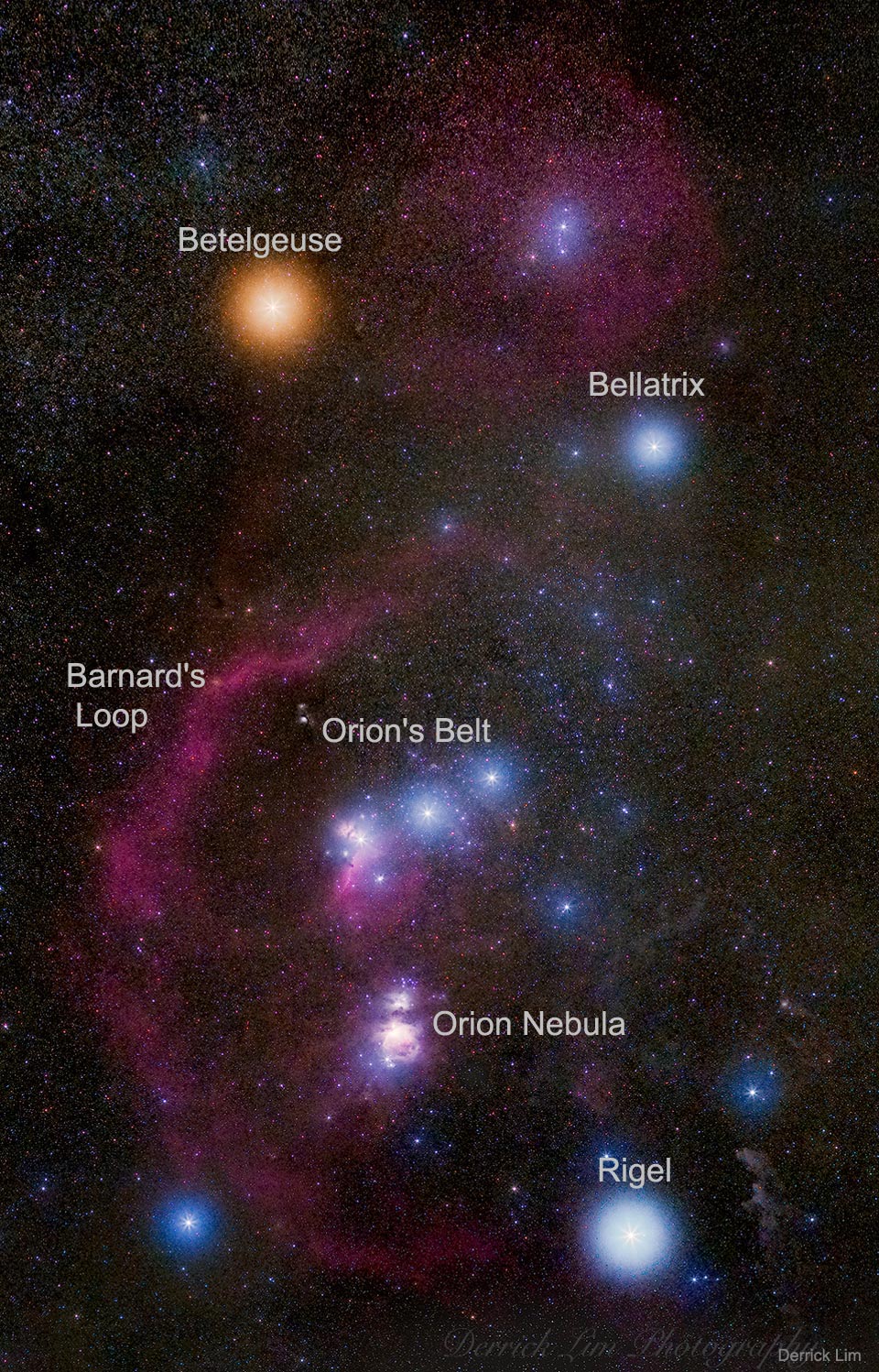
Camera Orion
Image Credit & Copyright: Derrick Lim
https://apod.nasa.gov/apod/ap180321.htmlDo you recognize this constellation? Although it is one of the most recognizable star groupings on the sky, Orion’s icons don’t look quite as colorful to the eye as they do to a camera. In this 20-image digitally-composed mosaic, cool red giant Betelgeuse takes on a strong orange tint as the brightest star at the upper left. Orion’s hot blue stars are numerous, with supergiant Rigel balancing Betelgeuse at the lower right, and Bellatrix at the upper right Lined up in Orion’s belt are three stars all about 1,500 light-years away, born from the constellation’s well-studied interstellar clouds. Below Orion’s belt a reddish and fuzzy patch that might also look familiar — the stellar nursery known as Orion’s Nebula. Finally, just barely visible to the unaided eye but quite striking here by camera is Barnard’s Loop — a huge gaseous emission nebula surrounding Orion’s Belt and Nebula discovered over 100 years ago by the pioneering Orion photographer E. E. Barnard.
Importé de Google+
ROTFLMAO 😉
Importé de Google+
Importé de Google+