French Bookstore Invites its Instagram Followers to Judge Books by Their Covers

Importé de Google+
Google+ reshared post
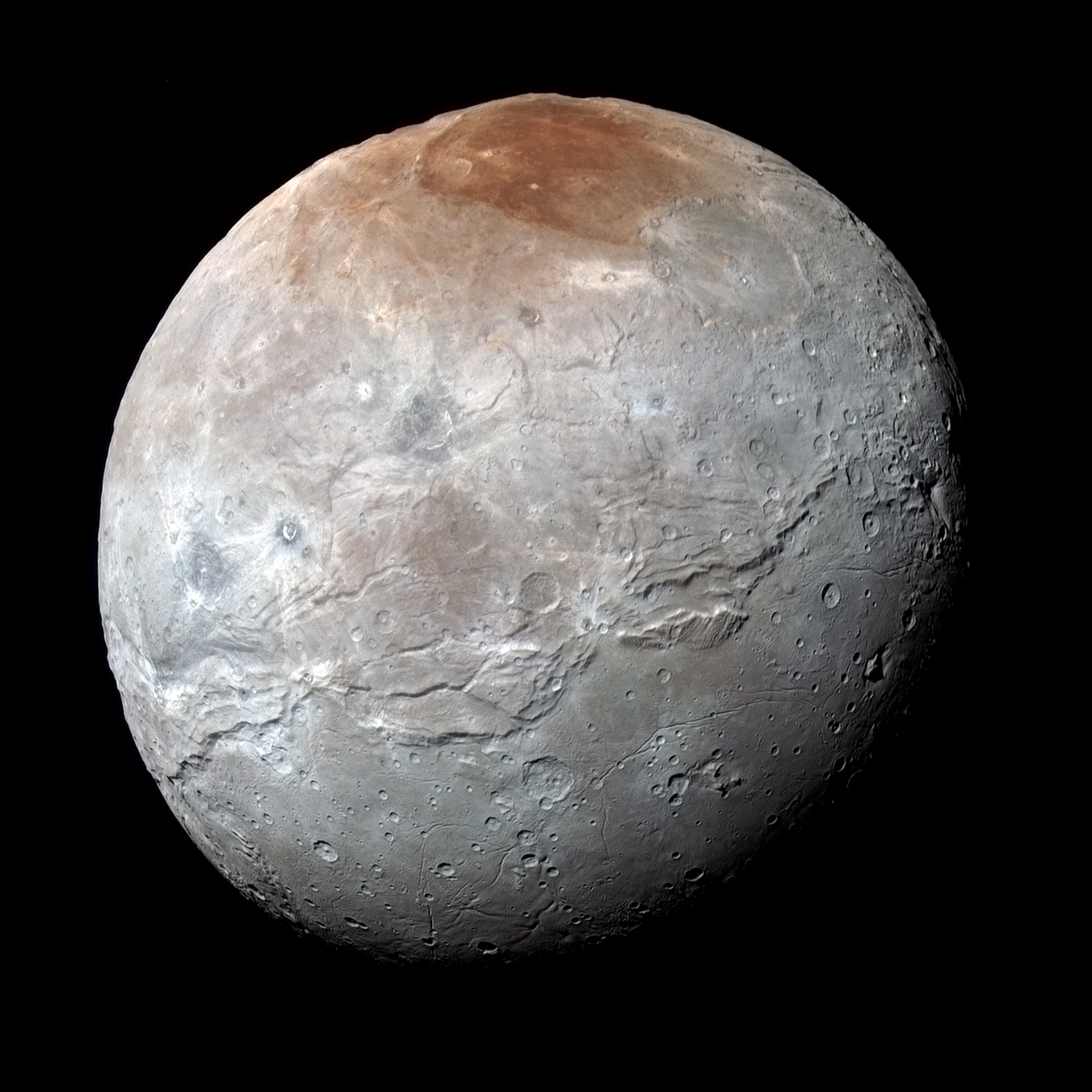
Charon: Moon of Pluto
Image Credit: +NASA, Johns Hopkins Univ./APL, Southwest Research Institute, U.S. Naval Observatory
https://apod.nasa.gov/apod/ap180706.htmlA darkened and mysterious north polar region known to some as Mordor Macula caps this premier high-resolution view. The portrait of Charon, Pluto’s largest moon, was captured by New Horizons near the spacecraft’s closest approach on July 14, 2015. The combined blue, red, and infrared data was processed to enhance colors and follow variations in Charon’s surface properties with a resolution of about 2.9 kilometers (1.8 miles). A stunning image of Charon’s Pluto-facing hemisphere, it also features a clear view of an apparently moon-girdling belt of fractures and canyons that seems to separate smooth southern plains from varied northern terrain. Charon is 1,214 kilometers (754 miles) across. That’s about 1/10th the size of planet Earth but a whopping 1/2 the diameter of Pluto itself, and makes it the largest satellite relative to its parent body in the Solar System. Still, the moon appears as a small bump at about the 1 o’clock position on Pluto’s disk in the grainy, negative,telescopic picture inset at upper left. That view was used by James Christy and Robert Harrington at the U.S. Naval Observatory in Flagstaff to discover Charon 40 years ago in June of 1978.
Importé de Google+
Importé de Google+
Importé de Google+
Importé de Google+
Importé de Google+
e=mc^2, errors=(more code)^2. Rigolo, mais math fail 😉
First law of software quality:
errors = (more code)^2
E = mc^2 pic.twitter.com/hjBPMwu4r4— Ingram Chen (@ingramchen) November 12, 2014
Importé de Google+
Google+ reshared post
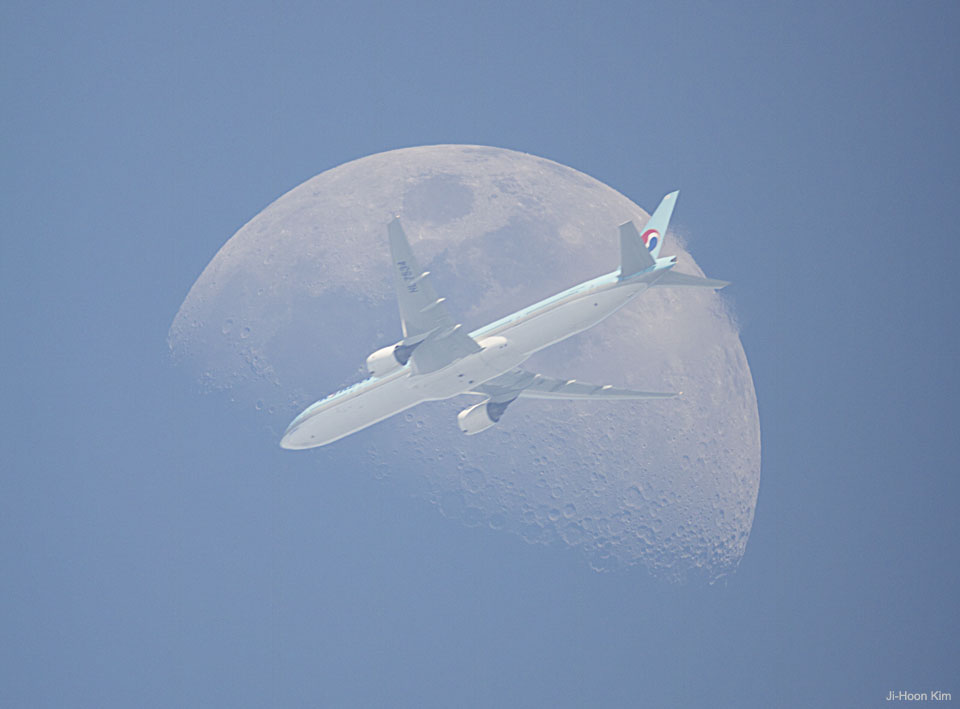
An Airplane in Front of the Moon
Image Credit & Copyright: Ji-Hoon Kim
https://apod.nasa.gov/apod/ap180703.htmlIf you look closely at the Moon, you will see a large airplane in front of it. Well, not always. OK, hardly ever. Actually, to capture an image like this takes precise timing, an exposure fast enough to freeze the airplane and not overexpose the Moon — but slow enough to see both, a steady camera, and luck — because not every plane that approaches the Moon crosses in front. Helpful equipment includes a camera with fast continuous video mode and a mount that automatically tracks the Moon. The featured fleeting superposition was captured from Seoul, South Korea two weeks ago during a daytime waxing gibbous moonrise. Within 1/10th of a second, the airplane crossing was over.
Importé de Google+
Google+ reshared post
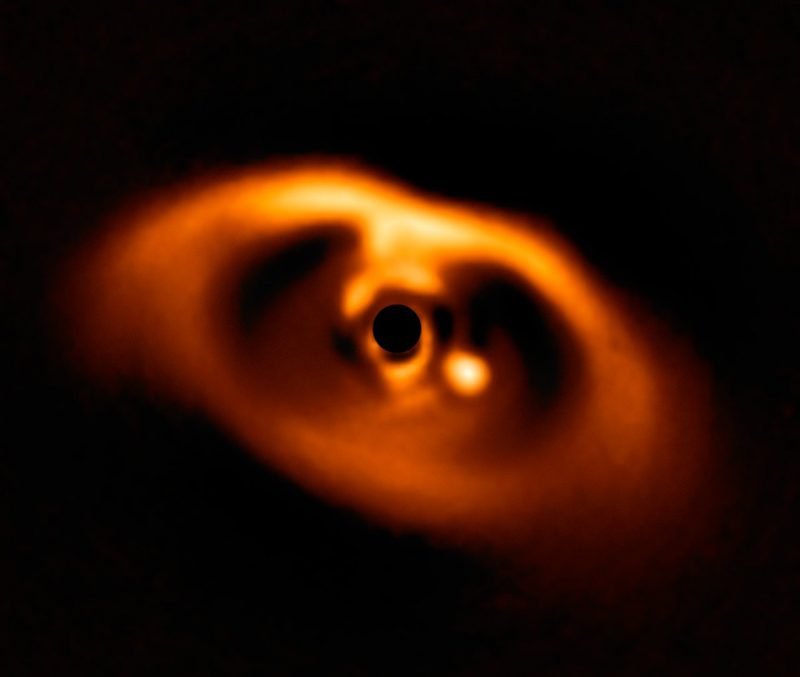
1st confirmed image of a newborn planet http://bit.ly/2INXKpV
The newly imaged newborn planet is located at about the distance of Uranus – our solar system’s 7th planet – from the dwarf star PDS 70. It’s atmosphere appears to be “cloudy,” these astronomers said.
Importé de Google+