likecool.com: Mission to the edge of Space

“The mission, Red Bull Stratos, will take renowned athlete Felix Baumgartner to at least 120,000 feet above the earth, to the very edge of Space.

From there, he will attempt a stratospheric free fall jump – the longest in the history of man – and hopefully will become the first human to break the speed of sound with his own body.

Mach > 1.0? Outch, ca risque de faire mal.
APOD: Eclipses in the Shade

APOD: Eclipses in the Shade

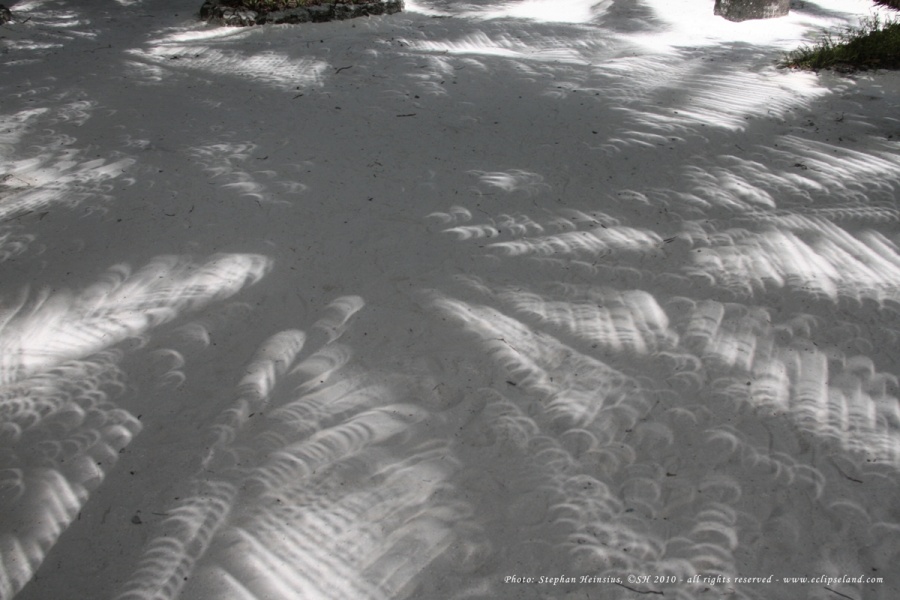
Explanation: Eclipses are everywhere in this shady scene. The picture was taken on the Indian Ocean atoll island of Ellaidhoo, Maldives, on January 15, during the longest annular solar eclipse for the next 1,000 years. Tall palm trees provided the shade. Their many crossed leaves created gaps that acted like pinhole cameras, scattering recognizable eclipse images across the white sands of a tropical garden near the beach. From this idyllic location near the centerline of the Moon’s shadow track, the ring of fire or annular phase of the eclipse lasted about 10 minutes and 55 seconds.

APOD: The Mysterious Voynich Manuscript

APOD: The Mysterious Voynich Manuscript

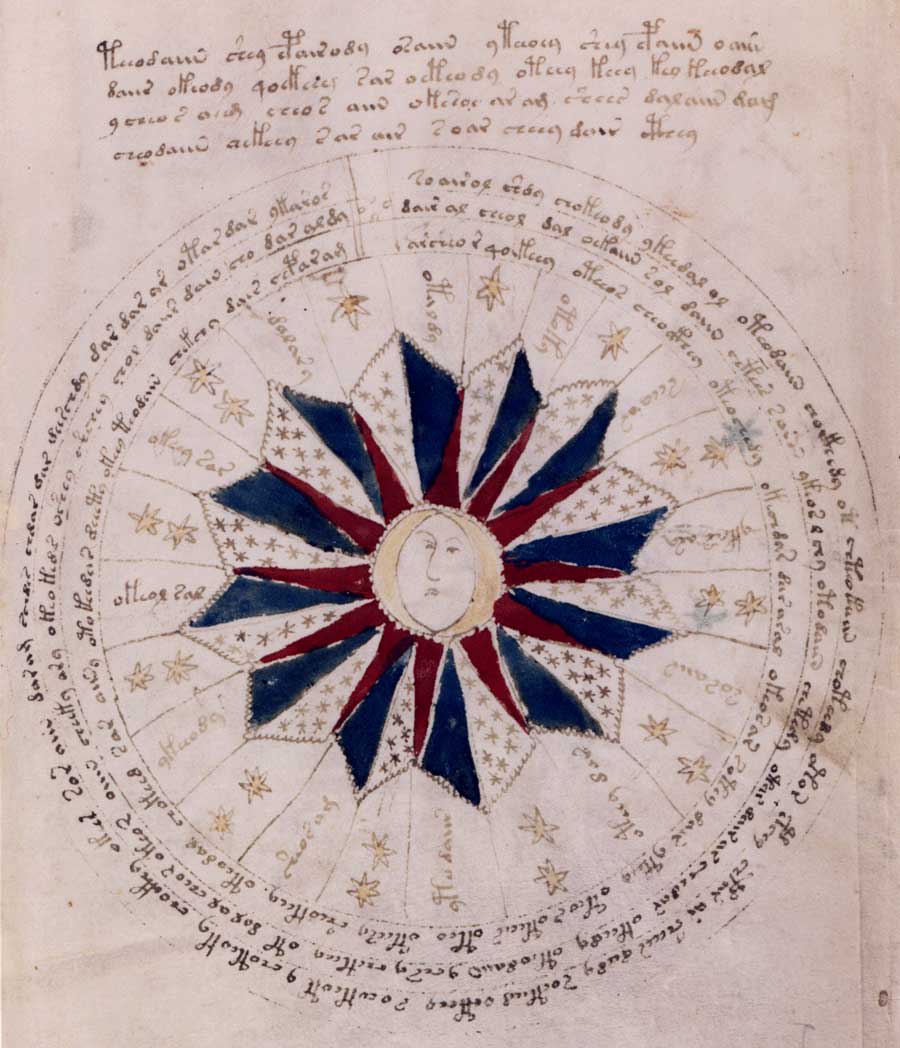
Explanation: The ancient text has no known title, no known author, and is written in no known language: what does it say and why does it have many astronomy illustrations? The mysterious book was once bought by an emperor, forgotten on a library shelf, sold for thousands of dollars, and later donated to Yale. Possibly written in the 15th century, the over 200-page volume is known most recently as the Voynich Manuscript, after its (re-)discoverer in 1912. Pictured above is an illustration from the book that appears to be somehow related to the Sun. The book labels some patches of the sky with unfamiliar constellations. The inability of modern historians of astronomy to understand the origins of these constellations is perhaps dwarfed by the inability of modern code-breakers to understand the book’s text. Can the eclectic brain trust of APOD readers make any progress? If you think you can provide any insight, instead of sending us email please participate in a fresh online discussion. The book itself remains in Yale’s rare book collection under catalog number “MS 408.”

APOD: Dark Sand Cascades on Mars

APOD: Dark Sand Cascades on Mars

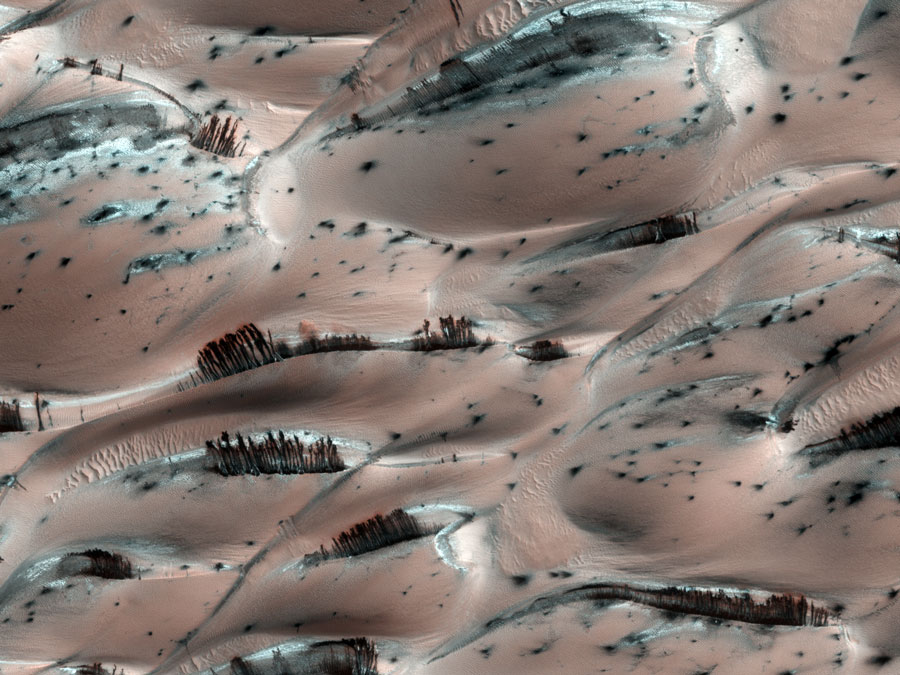
Explanation: They might look like trees on Mars, but they’re not. Groups of dark brown streaks have been photographed by the Mars Reconnaissance Orbiter on melting pinkish sand dunes covered with light frost. The above image was taken in 2008 April near the North Pole of Mars. At that time, dark sand on the interior of Martian sand dunes became more and more visible as the spring Sun melted the lighter carbon dioxide ice. When occurring near the top of a dune, dark sand may cascade down the dune leaving dark surface streaks — streaks that might appear at first to be trees standing in front of the lighter regions, but cast no shadows. Objects about 25 centimeters across are resolved on this image spanning about one kilometer. Close ups of some parts of this image show billowing plumes indicating that the sand slides were occurring even when the image was being taken.