Via: swiss-miss.com: History of Ski Aerial Acrobatics
Outch!
Via: swiss-miss.com: History of Ski Aerial Acrobatics
Outch!
Key Letter By Descartes Found After 170 Years
“[T]housands of treasured documents… vanished from the Institut de France in the mid-1800s, stolen by an Italian mathematician. Among them were 72 letters by René Descartes… Now one of those purloined letters has turned up at a small private college in eastern Pennsylvania… The letter, dated May 27, 1641, concerns the publication of Meditations on First Philosophy, a celebrated work whose use of reason and scientific methods helped to ignite a revolution in thought.”
Un commentaire rigolo sur slashdot:
> can we have the text please? (Preferably in a human language)
Sorry, it’s written in French.
On Crete, New Evidence of Very Ancient Mariners
Via: richarddawkins.net: On Crete, New Evidence of Very Ancient Mariners
That is the startling implication of discoveries made the last two summers on the Greek island of Crete. Stone tools found there, archaeologists say, are at least 130,000 years old, which is considered strong evidence for the earliest known seafaring in the Mediterranean and cause for rethinking the maritime capabilities of prehuman cultures.
Crete has been an island for more than five million years, meaning that the toolmakers must have arrived by boat. So this seems to push the history of Mediterranean voyaging back more than 100,000 years, specialists in Stone Age archaeology say. Previous artifact discoveries had shown people reaching Cyprus, a few other Greek islands and possibly Sardinia no earlier than 10,000 to 12,000 years ago.
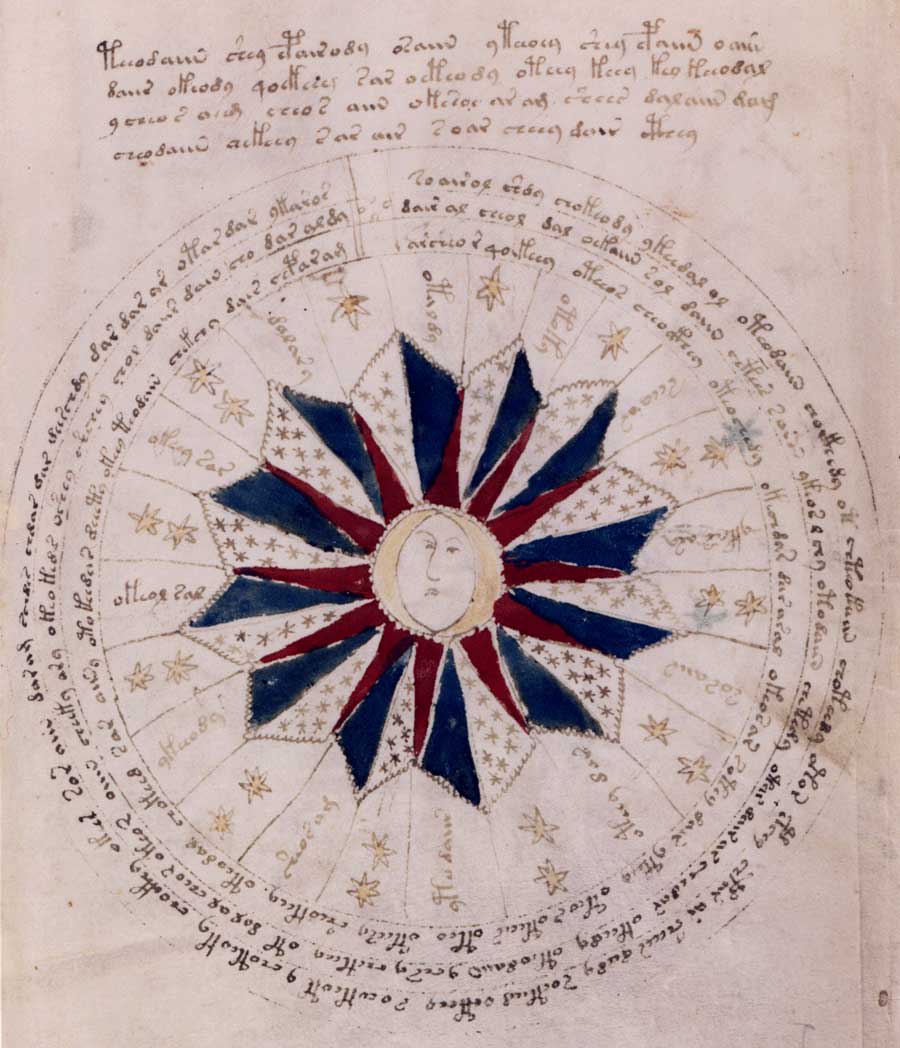
APOD: The Mysterious Voynich Manuscript
Explanation: The ancient text has no known title, no known author, and is written in no known language: what does it say and why does it have many astronomy illustrations? The mysterious book was once bought by an emperor, forgotten on a library shelf, sold for thousands of dollars, and later donated to Yale. Possibly written in the 15th century, the over 200-page volume is known most recently as the Voynich Manuscript, after its (re-)discoverer in 1912. Pictured above is an illustration from the book that appears to be somehow related to the Sun. The book labels some patches of the sky with unfamiliar constellations. The inability of modern historians of astronomy to understand the origins of these constellations is perhaps dwarfed by the inability of modern code-breakers to understand the book’s text. Can the eclectic brain trust of APOD readers make any progress? If you think you can provide any insight, instead of sending us email please participate in a fresh online discussion. The book itself remains in Yale’s rare book collection under catalog number “MS 408.”