APOD: Crescent Earth from the Departing Rosetta Spacecraft
APOD: Crescent Earth from the Departing Rosetta Spacecraft

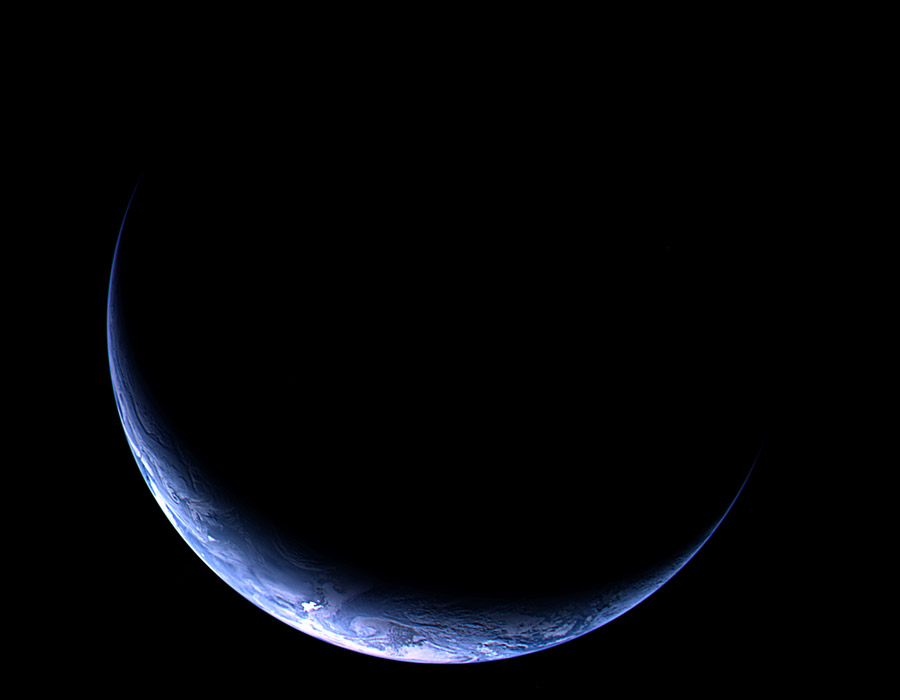
Explanation: Goodbye Earth. Earlier this month, ESA’s interplanetary Rosetta spacecraft zoomed past the Earth on its way back across the Solar System. Pictured above, Earth showed a bright crescent phase featuring the South Pole to the passing rocket ship. Launched from Earth in 2004, Rosetta used the gravity of the Earth to help propel it out past Mars and toward a 2014 rendezvous with Comet Churyumov-Gerasimenko. Last year, the robot spacecraft passed asteroid 2867 Steins, and next year it is scheduled to pass enigmatic asteroid 21 Lutetia. If all goes well, Rosetta will release a probe that will land on the 15-km diameter comet in 2014.


Epsilon Aurigae

Via: Cosmic Variance: My Favorite Star

In that case, we could imagine that the central star (presumably holding the disk together) could clear out a region near the center, and light passing through that hole could account for the brightening. I wrote a simple computer program (QuickBASIC on an IBM PC!) to calculate the light curve in this model, and we were able to get an extremely good fit to the data.

But technology has advanced quite a bit since my student years. Nowadays, we don’t need to puzzle out the meaning of a light curve and come up with an elaborate story involving tilted disks; we can just take pictures of the thing.

Tidal locking

Je croyais que le fait que la Lune ait une rotation synchrone etait un heureux hasard. Mais j’aurais du me douter que si c’etait le cas pour notre Lune, ca devait etre plutot banal comme situation. C’est en effet le cas grace au “Tidal locking” qui pousse les rotations de lunes a etre synchrones.

Tire de wikipedia.org: Synchronous rotation:

The Moon is in synchronous rotation about the Earth. In fact, most major moons in the solar system have synchronous rotation due to tidal locking.

APOD: Mars and a Colorful Lunar Fog Bow

APOD: Mars and a Colorful Lunar Fog Bow

Explanation: Even from the top of a volcanic crater, this vista was unusual. For one reason, Mars was dazzlingly bright two weeks ago, when this picture was taken, as it was nearing its brightest time of the entire year. Mars, on the far upper left, is the brightest object in the above picture. The brightness of the red planet peaked last week near when Mars reached opposition, the time when Earth and Mars are closest together in their orbits. Arching across the lower part of the image is a rare lunar fog bow. Unlike a more commonly seen rainbow, which is created by sunlight reflected prismatically by falling rain, this fog bow was created by moonlight reflected by the small water drops that compose fog. Although most fog bows appear white, all of the colors of the rainbow were somehow visible here. The above image was taken from high atop Haleakala, a huge volcano in Hawaii, USA.

APOD: Eclipses in the Shade

APOD: Eclipses in the Shade

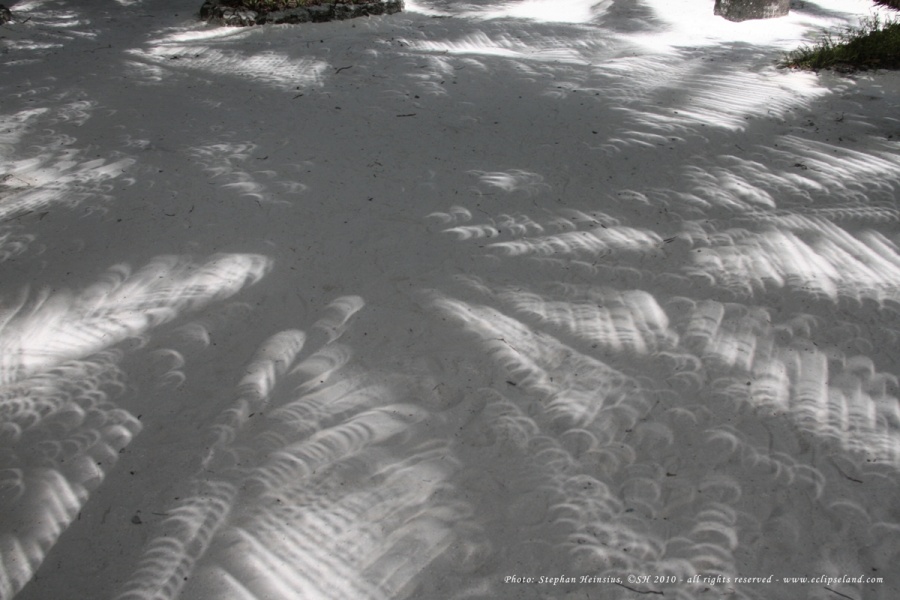
Explanation: Eclipses are everywhere in this shady scene. The picture was taken on the Indian Ocean atoll island of Ellaidhoo, Maldives, on January 15, during the longest annular solar eclipse for the next 1,000 years. Tall palm trees provided the shade. Their many crossed leaves created gaps that acted like pinhole cameras, scattering recognizable eclipse images across the white sands of a tropical garden near the beach. From this idyllic location near the centerline of the Moon’s shadow track, the ring of fire or annular phase of the eclipse lasted about 10 minutes and 55 seconds.

APOD: The Mysterious Voynich Manuscript

APOD: The Mysterious Voynich Manuscript

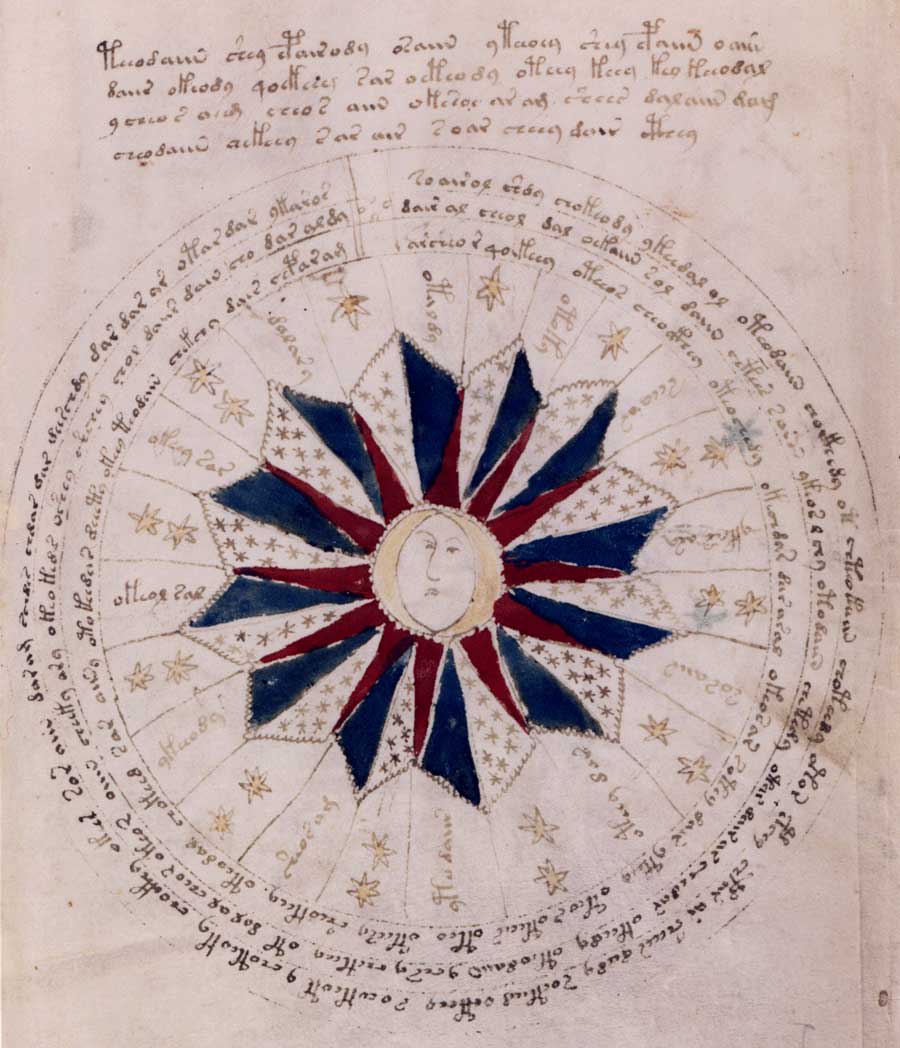
Explanation: The ancient text has no known title, no known author, and is written in no known language: what does it say and why does it have many astronomy illustrations? The mysterious book was once bought by an emperor, forgotten on a library shelf, sold for thousands of dollars, and later donated to Yale. Possibly written in the 15th century, the over 200-page volume is known most recently as the Voynich Manuscript, after its (re-)discoverer in 1912. Pictured above is an illustration from the book that appears to be somehow related to the Sun. The book labels some patches of the sky with unfamiliar constellations. The inability of modern historians of astronomy to understand the origins of these constellations is perhaps dwarfed by the inability of modern code-breakers to understand the book’s text. Can the eclectic brain trust of APOD readers make any progress? If you think you can provide any insight, instead of sending us email please participate in a fresh online discussion. The book itself remains in Yale’s rare book collection under catalog number “MS 408.”

APOD: Dark Sand Cascades on Mars

APOD: Dark Sand Cascades on Mars

Explanation: They might look like trees on Mars, but they’re not. Groups of dark brown streaks have been photographed by the Mars Reconnaissance Orbiter on melting pinkish sand dunes covered with light frost. The above image was taken in 2008 April near the North Pole of Mars. At that time, dark sand on the interior of Martian sand dunes became more and more visible as the spring Sun melted the lighter carbon dioxide ice. When occurring near the top of a dune, dark sand may cascade down the dune leaving dark surface streaks — streaks that might appear at first to be trees standing in front of the lighter regions, but cast no shadows. Objects about 25 centimeters across are resolved on this image spanning about one kilometer. Close ups of some parts of this image show billowing plumes indicating that the sand slides were occurring even when the image was being taken.

APOD: The Mystery of the Fading Star

Via: The Mystery of the Fading Star

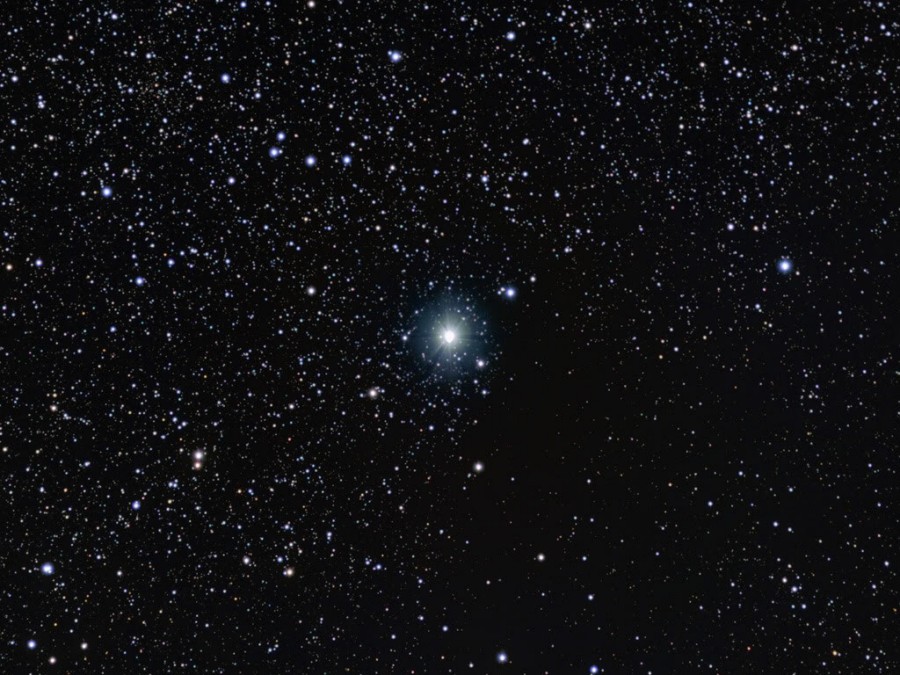
Explanation: Every 27 years Epsilon Aurigae fades, remaining dim for roughly two years before growing bright again. Since the 19th century, astronomers have studied the mystery star, eventually arguing that Epsilon Aur, centered in this telescopic skyview, was actually undergoing a long eclipse by a dark companion object. But the nature of the companion and even the state of bright star itself could not be pinned down by observations. Continuing to collect evidence, Citizen Sky, a team of professional and amateur astronomers, is studying the current eclipse of Epsilon Aur, reporting that it began in August 2009 and by late December had reached its deepest point. Epsilon Aur is now expected to remain dim for all of 2010, before rapidly regaining normal brightness in 2011. Meanwhile, recent infrared data from the Spitzer Space Telescope supports a model for the enigmatic system that identifies Epsilon Aur as a large but lower mass star near the end of its life, periodically eclipsed by a single star embedded in a dusty disk. The disk is estimated to have a radius of about 4 AU, or 4 times the Earth-Sun distance, and to be about 0.5 AU thick.