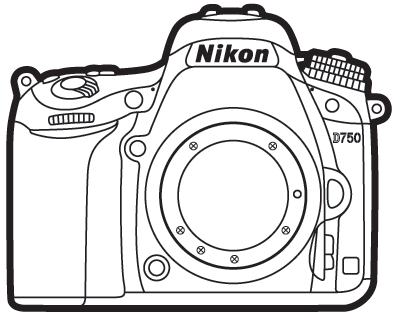
J’imagine que c’est pour corrige le probleme (maintenant avoue par Nikon) du flare weird sur la D750. J’avais finalement commande la D750 au black friday. Apres, c’etait out of stock juste qu’au 15 janvier. Maintenant la date a ete repoussee au 30 janvier. A suivre.
The largest NASA Hubble Space Telescope image ever assembled, this sweeping view of a portion of the Andromeda galaxy (M31) is the sharpest large composite image ever taken of our galactic neighbor.
Though the galaxy is over 2 million light-years away, the Hubble telescope is powerful enough to resolve individual stars in a 61,000-light-year-long section of the galaxy’s pancake-shaped disk.
It’s like photographing a beach and resolving individual grains of sand. And, there are lots of stars in this sweeping view — over 100 million, with some of them in thousands of star clusters seen embedded in the disk.
This ambitious photographic cartography of the Andromeda galaxy represents a new benchmark for precision studies of large spiral galaxies which dominate the universe’s population of over 100 billion galaxies.
Never before have astronomers been able to see individual stars over a major portion of an external spiral galaxy. Most of the stars in the universe live inside such majestic star cities, and this is the first data that reveal populations of stars in context to their home galaxy.
The panorama is the product of the Panchromatic Hubble Andromeda Treasury (PHAT) program. Images were obtained from viewing the galaxy in near-ultraviolet, visible, and near-infrared wavelengths, using the Advanced Camera for Surveys and the Wide Field Camera 3 aboard Hubble.
Credit: NASA, ESA, and M. Estacion and G. Bacon (STScI).
Acknowledgment: A. Mellinger. Digitized Sky Survey ((DSS). STScI/AURA. Palomar/Caltech. J. Dalcanton (University of Washington). The PHAT team. R. Gendler.
Adrift in the rich star fields of the constellation Cygnus, this lovely, symmetric nebula was only recognized a few years ago and does not yet appear in some astronomical catalogs. In fact, amateur astronomer Dave Jurasevich identified it as a nebula on 2008 July 6 in his images of the complex Cygnus region that included the Crescent Nebula (NGC 6888). He subsequently notified the International Astronomical Union. Only eleven days later the same object was independently identified by Mel Helm at Sierra Remote Observatories, imaged by Keith Quattrocchi and Helm, and also submitted to the IAU as a potentially unknown nebula. The nebula, appearing on the left of the featured image, is now known as the Soap Bubble Nebula. What is the newly recognized nebula? Most probably it is a planetary nebula, a final phase in the life of a sun-like star.